
Chefs in Schools releases toolkit to help education caterers reduce food waste
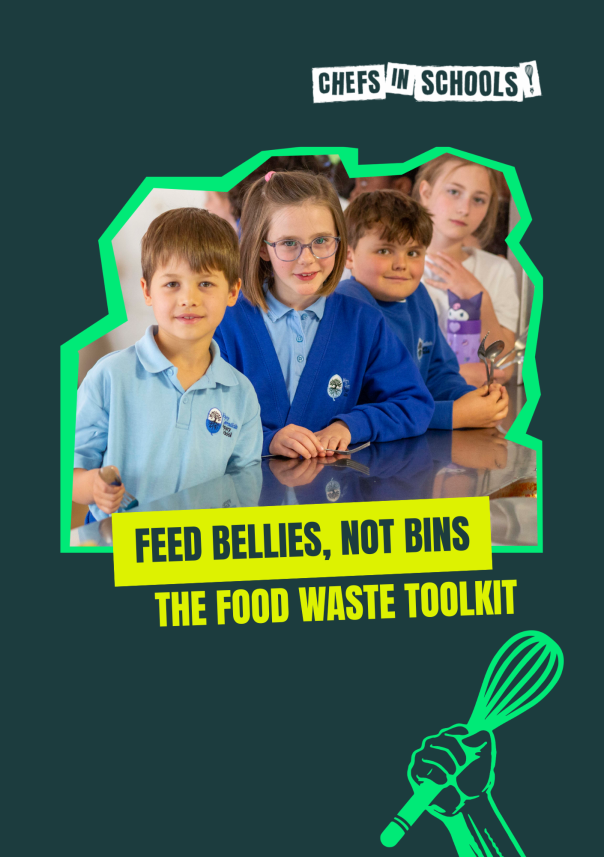
Chefs in Schools has released ‘Feed Bellies, Not Bins: a free Food Waste Toolkit’ for school kitchens across England. It is a practical manual for the people who actually run school kitchens — covering waste measurement, circular menu design, portion control, and zero-waste recipes.
Head chef Matt Green at Bishop Gilpin Primary School in Wimbledon attended a Chefs in Schools conference and came back with a simple idea to make food waste visible and turn it into a competition.
He bought a set of scales and biodegradable bags — one per year group. The group with the least waste at the end of term won a meal of their choice. Food waste at the school fell by 15%.
Mr Page, school council lead at Bishop Gilpin Primary School, said: “Parents often email me to say their child is now eating broccoli at home because they’ve realised food waste matters. Councillors share messages like, ‘My mum told me to say I’m eating all my greens now.’ It’s feeding into home life.”
In 2025, Chefs in Schools worked with 35 school chefs across 33 schools — 18 primaries and 15 secondaries — funded by environmental charity Hubbub and the Eat It Up Fund. The programme trained kitchen teams to measure, understand and reduce food waste, embedding practical systems into everyday operations.
The results were significant as an average 20g reduction in food waste per child per day, and over 15kg of total food waste saved per school, per week — equivalent to a saving of more than £1,170 per 100 pupils per school year.
Louis Davidson, programme manager and school chef educator at Chefs in Schools, added: “Tackling food waste is a triple win for schools — it lowers environmental impact, reduces food insecurity and reallocates vital funds back into the classroom and dining hall. These savings aren’t just a financial benefit, they represent a commitment to making every penny work harder for our children and the planet.”