
Premier Foods unites key industry players to host Education Innovation day
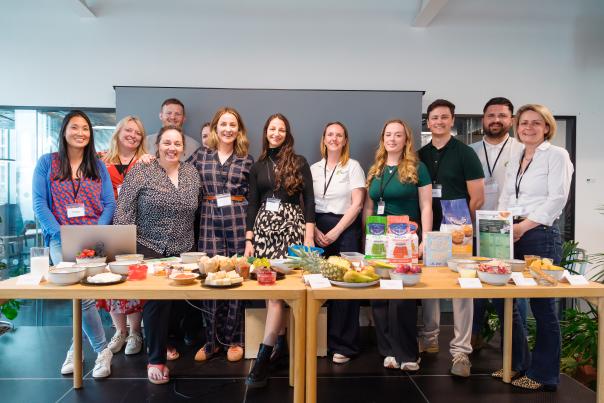
In particular, the focus was on proposed changes to the School Food Standards, which became mandatory for all state-funded schools in England in 2015 and succeeded the 2006 nutrient-based standards.
The proposals, which are out for consultation until mid-June, include a complete ban on deep-fried food, while high-sugar items will be restricted. Fruit will replace ‘sugar-laden treats’ for the majority of the school week, and schools will no longer be allowed to offer ‘unhealthy grab-and-go’ options like sausage rolls and pizza every day.
Organisers of the Premier event said: “The purpose of the event is to address key challenges within the education sector, while inspiring caterers with practical, compliant and engaging menu ideas.
“With potential changes to school food standards on the horizon, the session is designed to provide both food for thought and actionable guidance to support the delivery of nutritious, appealing meals for students.”
The day started with a presentation from dietitian Katie Kennedy, who explained childhood obesity is influenced by much more than what happens in school.
And she said that any changes to the School Food Standards had to be properly backed, supported and measurable if they were to make a meaningful impact.
This was followed by a panel discussion that addressed the potential impact on catering of the proposed changes, as well as the wider challenges faced by the sector.
These include the closure of a growing number of local authority-run school meals services due to insufficient funding, and issues around the recruitment and training of school catering teams.
Katie Edwards was joined on the panel by Louise Wagstaffe, a development chef, Brad Pearce, chair of The School Food People (formerly LACA), and Andy Wilcock, head of food at Impact Food Group.
The attendees then saw some live cooking demos as School Chef of the Year (SCOTY) winner Erin Ward showed off a tasty main course dish including bhajis and dhal using cheap ingredients, as well as the dessert that helped her win the title last year - sweet nachos with lime mousse and fruit salsa.
After lunch the attendees were split into groups to work on the challenge of creating on paper a dessert that was tasty, included lots of fruit and micro-nutrients, was sustainable but also affordable for schools.
Ideas included muffins, tray bakes and Angel Delight-based pot desserts, and AI tools were used to bring the ideas to life with colourful imagery.
Improving school food is more than revising standards
The panel discussion that featured dietitian Katie Edwards, development chef Louise Wagstaffe, chair of The School Food People Brad Pearce, and chair of The School Food People at IFG Andy Wilcock felt any changes needed a joined-up approach.
This would include a mix of realistic funding, practical implementation, staff training, allergen safety, better measurement, and food that children are willing to eat. They also drew attention to the differences between primary and secondary settings, and the need to involve both pupils and parents.
A major concern was that funding is not keeping pace with the real cost of providing compliant, nutritious school meals, including ingredients, staffing, training and operational support.
And they reinforced the need for school food standards to be monitored and measured to assess whether changes actually improve children’s nutrition.
The panel highlighted the importance of establishing a baseline of what children are currently eating before introducing new standards, followed by robust review after implementation. It also noted that primary and secondary school food provision are fundamentally different and may require different approaches or standards.
In primary schools it is generally easier to deliver a plated meal within standards, whereas in secondary schools, food choices are influenced by shorter lunch periods, grab-and-go habits, peer pressure and competition from external food outlets.
The panel emphasised that children only benefit from nutrition if they actually eat the food, while there was also concern that overly technical nutrient-based standards could become too complicated for catering teams to interpret and deliver.
And panel members suggested that future standards may need a practical middle ground — for example, encouraging nutrient-dense foods and food groups without requiring complex nutrient calculations.
Vegetarian and plant-based provision was discussed as a particular challenge, especially where caterers are trying to balance nutrition, pupil preference, cost and allergen restrictions.
There was caution against demonising certain foods in future standards, as some foods higher in fat, salt or sugar may still play an important role in helping children access key nutrients. An example cited was cheese.
The discussion made clear that micronutrients are a particular concern, and panel members worried that poorly designed changes could unintentionally reduce nutrient intake.
Allergen management was identified as a major operational and safeguarding challenge, requiring clear systems, simple menus, strong training and staff confidence.
Panel members stressed that safe allergen practice depends on consistent training, auditing, clear processes and building staff confidence, particularly for lower-paid frontline kitchen teams.
Meanwhile, the shortage of skilled staff and the difficulty of recruitment were highlighted as serious pressures across school catering. Training was seen as essential, not only for food quality and compliance, but also for retention, safety and confidence in kitchens.
They also highlighted the importance of bringing children and parents with them when making menu or standards changes, rather than introducing changes too abruptly. This could include tasting sessions, gradual menu changes, and communication with parents.
There was support for stronger food and nutrition education in schools, so children better understand healthy choices, where food comes from and why balanced eating matters.