
School meals system ‘not broken, but cracks beginning to show’
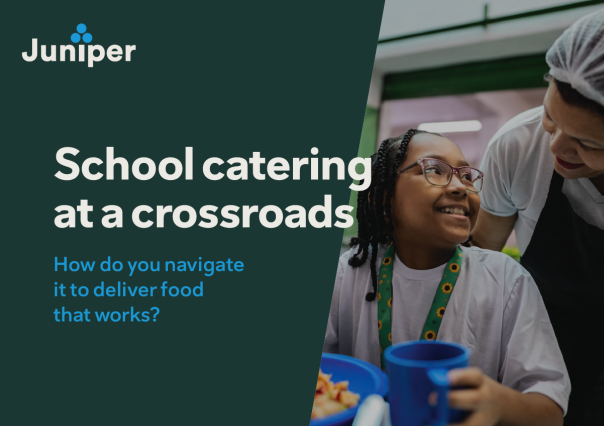
But, it warns, inflationary pressures mean costs have been reset at a higher level; expectations around nutrition, compliance, sustainability and pupil experience have increased; recruitment and retention is more fragile; and there is less flexibility in budgets and staffing models.
The study has been compiled by Juniper Ventures, a contract catering and allied services provider that is owned by the London Borough of Newham and focuses primarily on schools.
Michael Hales, the chief executive, said: “Pressure does not mean failure. It means is that the system now has very little room for error. This research indicates that most schools rate their catering provision positively. They describe it as a dependable part of the school day that provides routine, familiarity and care for pupils.
“This baseline is important. Whilst much of the public narrative frames school meals as being in a state of crisis, schools themselves tend to describe something more complex - provision is holding up, but only because teams are managing to work within tighter constraints than before.
“What is notable is that these constraints show up across delivery models. Schools running catering in house, local authority providers and external operators all report similar structural pressures, even when operational approaches differ.
“This points to a shared context: a system where the standards are clear and the intent is strong, but where the operating conditions make stability harder to maintain.”
He said the research showed that the challenge schools faced was not a lack of commitment to catering, but how to sustain what works in a system costs and expectations have risen, staffing is harder to stabilise, and there is less margin for error.
He concluded: “A more honest conversation about funding, capacity, people and trade-offs is essential.”